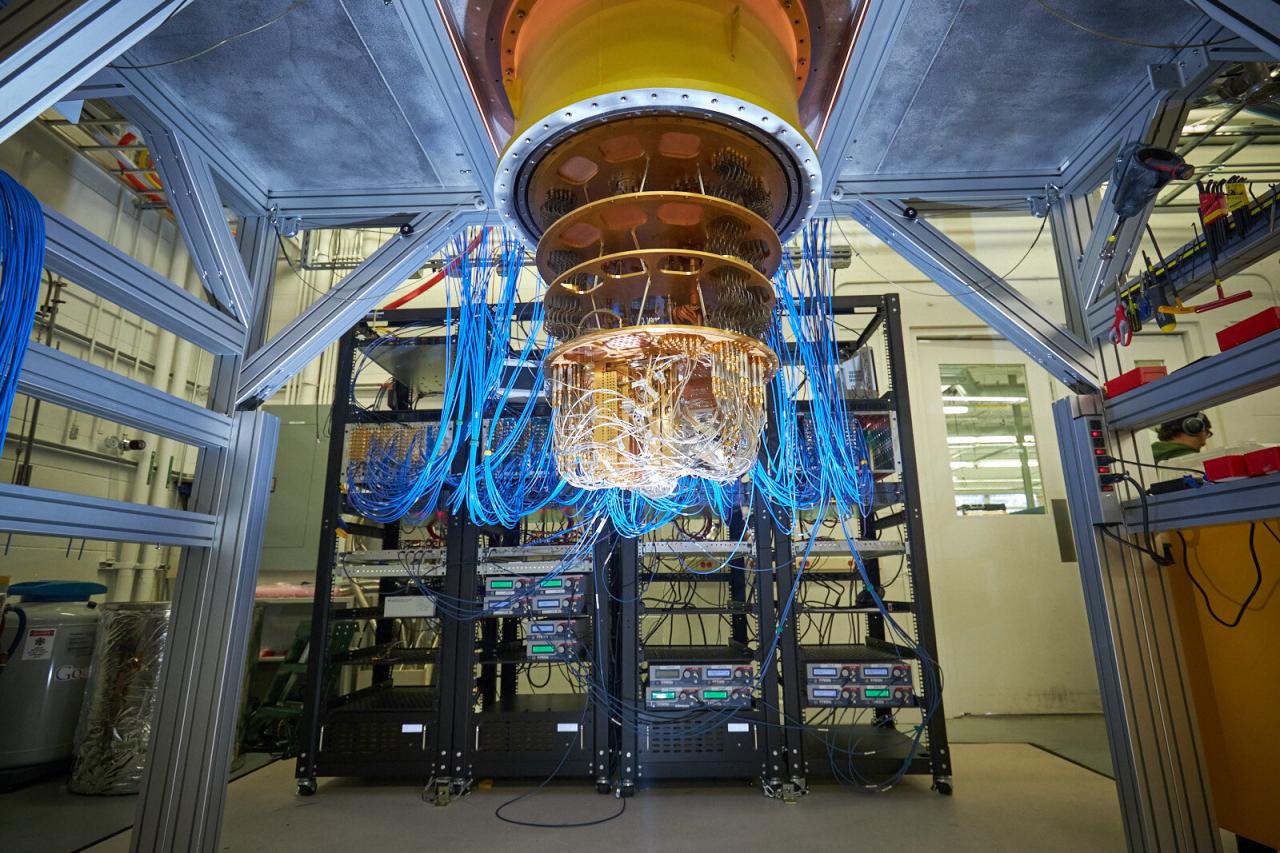
The arrival of quantum computing represents a paradigm shift that goes far beyond the incremental improvements we usually see in the world of technology. While classical computers have reached a plateau in their ability to process complex, multi-variable simulations, quantum systems are just beginning to unlock possibilities that were once confined to science fiction. For high-level enterprises, this is not just an academic curiosity but a powerful new engine for generating unprecedented financial growth. By utilizing the principles of superposition and entanglement, these next-gen machines can solve optimization problems in seconds that would take current supercomputers thousands of years to complete.
This leap in processing power allows businesses to revolutionize their research and development cycles, streamline global logistics, and create financial models with a precision that was previously impossible. Organizations that invest in quantum readiness today are positioning themselves to capture a massive share of the market as these technologies move from the laboratory to the commercial floor. We are entering an era where computational speed is the ultimate competitive advantage, directly translating into faster product launches and higher profit margins. This article provides a comprehensive roadmap for executives and innovators looking to understand how quantum breakthroughs will redefine the landscape of revenue generation in the very near future.
The Foundational Mechanics of Quantum Advantage
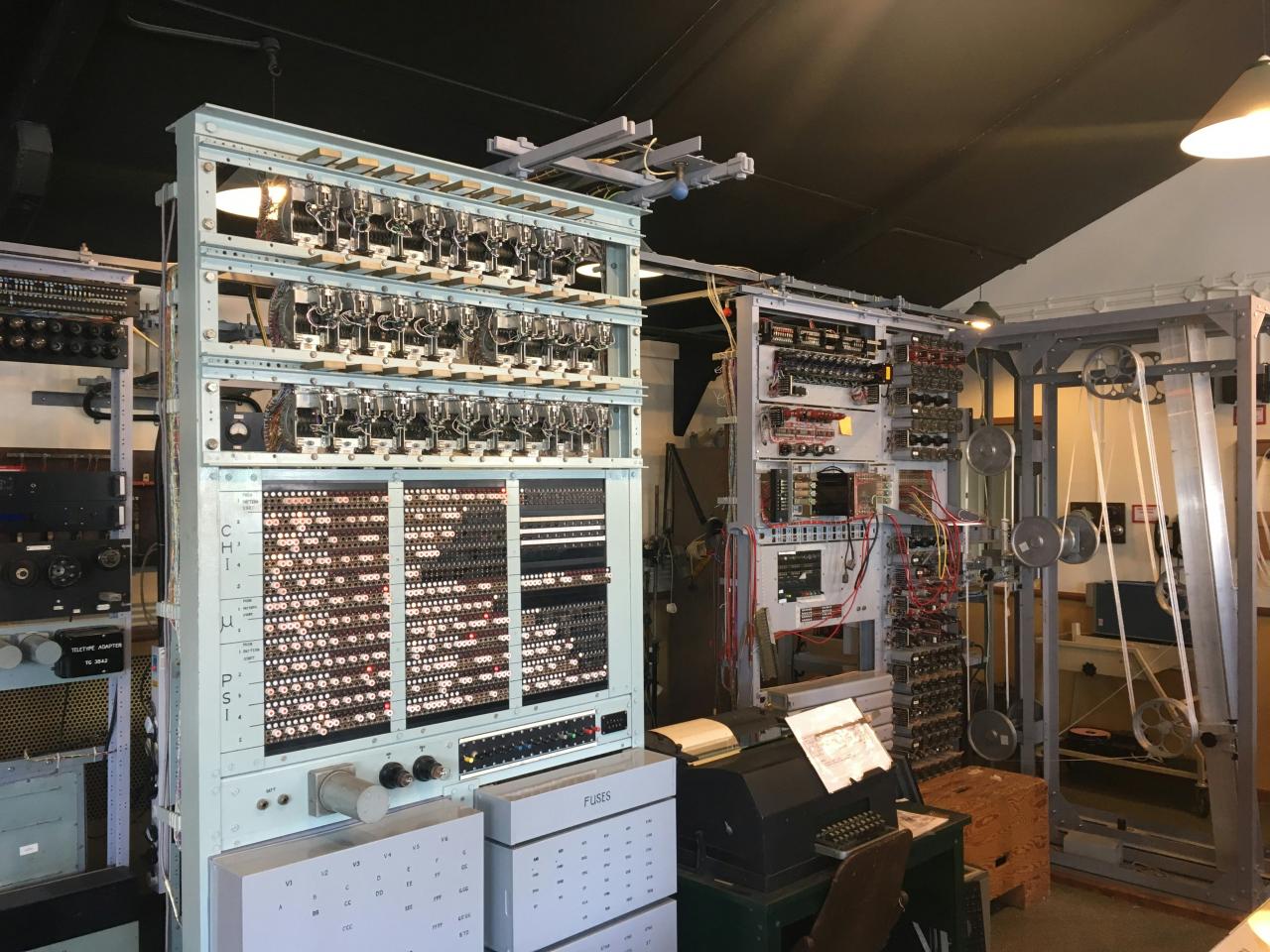
To understand how quantum computing drives revenue, we must first look at the unique way these machines handle information. Unlike traditional bits that are either zero or one, quantum bits, or “qubits,” exist in multiple states simultaneously.
This allows a quantum computer to explore every possible solution to a problem at the same time. For a business, this means the end of “trial and error” and the beginning of “perfect precision” in strategic planning.
A. The Principle of Superposition
Superposition allows qubits to represent a vast amount of data simultaneously. This means a quantum system can analyze a million different financial scenarios in the blink of an eye.
B. Entanglement and Systemic Correlation
Entanglement links qubits together regardless of their physical distance. In a business context, this allows for the modeling of highly complex global supply chains where every variable affects every other variable.
C. Quantum Interference for Error Correction
This process helps the computer home in on the correct answer by canceling out wrong paths. It ensures that the results provided to the business are accurate and actionable.
D. The Shift from Binary to Probabilistic Logic
Quantum computing doesn’t just give a “yes” or “no” answer. It provides a probability map of success, allowing leaders to make decisions based on the highest statistical likelihood of profit.
E. Hardware Advancements in Cryogenic Computing
Next-gen quantum machines require extreme cooling to function. The infrastructure surrounding these machines is creating a new ecosystem of specialized hardware providers and service industries.
Revolutionizing Financial Modeling and Risk Assessment
The financial sector is perhaps the most immediate beneficiary of quantum innovation. Current Monte Carlo simulations used for risk assessment are slow and often lack the depth needed for truly volatile markets.
Quantum algorithms can process these simulations with much higher “sampling” rates. This leads to a deeper understanding of market movements and the ability to hedge against risks that classical systems simply cannot see.
A. High-Frequency Trading and Arbitrage
Quantum systems can identify tiny price discrepancies across global markets faster than any human or classical bot. This allow for “risk-free” profit through lightning-fast arbitrage.
B. Portfolio Optimization and Asset Allocation
Finding the perfect balance of risk and reward in a portfolio of ten thousand stocks is a “hard” math problem. Quantum computers can solve this perfectly, ensuring maximum returns for institutional investors.
C. Credit Scoring and Fraud Detection
By analyzing trillions of transaction patterns, quantum AI can spot fraud before it happens. This saves banks billions in lost revenue and increases the speed of loan approvals.
D. Derivatives Pricing and Complex Valuations
Valuing complex financial instruments requires immense math. Quantum computing reduces the time needed for these calculations from hours to milliseconds, allowing for real-time pricing.
E. Macro-Economic Trend Prediction
Quantum models can ingest data from every corner of the globe to predict inflation, interest rate shifts, and consumer behavior. This allows firms to pivot their strategies before the market turns.
Transforming Pharmaceuticals and Material Science
The “discovery” phase of new drugs or materials is traditionally a massive “money pit” for enterprises. It takes years and billions of dollars to find one successful molecule among millions of failures.
Quantum computing allows for “In Silico” testing, where the physical properties of a molecule are simulated digitally with 100% accuracy. This removes the need for most physical laboratory testing, accelerating the path to revenue.
A. Molecular Docking and Drug Discovery
Quantum systems can simulate how a new drug will interact with human cells. This could lead to cures for diseases in months rather than decades, creating a massive revenue stream for biotech firms.
B. Battery Technology and Energy Storage
To build the next generation of electric vehicles, we need better batteries. Quantum simulation helps scientists discover new chemical compounds that can store more energy and charge faster.
C. Superconductor Research for Efficient Power
Imagine a power grid that loses zero energy during transmission. Quantum computing is the only way to find the materials needed to create room-temperature superconductors.
D. Carbon Capture and Climate Technology
Enterprises are racing to find the best way to pull carbon from the atmosphere. Quantum algorithms can design the filters and chemical processes needed to make this profitable.
E. Agricultural Innovation and Fertilizer Efficiency
Most of the world’s energy is used to create fertilizer. Quantum simulation can help us find a more efficient way to feed the planet, lowering costs for the entire agricultural sector.
Optimizing Global Logistics and Supply Chains
For a global enterprise, the supply chain is a massive “puzzle” with millions of moving parts. A single delay in one port can cause a ripple effect that costs millions in lost sales.
Quantum computing excels at “Traveling Salesman” problems—finding the most efficient route between many points. This optimization leads to lower fuel costs, faster delivery times, and higher customer satisfaction.
A. Real-Time Fleet Routing and Management
Quantum systems can adjust the routes of thousands of trucks or ships in real-time based on weather and traffic. This ensures that the supply chain is always running at peak efficiency.
B. Warehouse Automation and Inventory Placement
Knowing exactly where to store every item in a global network is a complex math problem. Quantum optimization ensures that products are always as close to the customer as possible.
C. Demand Forecasting and Production Scheduling
By linking consumer data with factory schedules, quantum AI can ensure that companies only build what people are actually going to buy. This eliminates the “waste” of unsold inventory.
D. Port Congestion and Container Management
Quantum systems can optimize the loading and unloading of ships, reducing the time spent in port. This increases the “throughput” of the entire global trade network.
E. Resilience Planning for “Black Swan” Events
Quantum models can simulate thousands of disaster scenarios, from pandemics to wars. This allows companies to build “anti-fragile” supply chains that can survive any crisis.
The Synergy of Quantum Computing and Artificial Intelligence
AI is already a major revenue driver, but it is limited by the “compute” available to train its models. Quantum-enhanced machine learning (QML) is the next evolution of this technology.
A quantum-trained AI can learn from much smaller datasets and find connections that a classical AI would miss. This leads to “Smarter” AI that can handle complex human tasks with much higher accuracy.
A. Generative Design and Product Development
Quantum AI can suggest thousands of new product designs based on specific goals like “lightweight” or “unbreakable.” This allows companies to innovate at a speed that was previously impossible.
B. Natural Language Processing at Scale
Quantum systems can understand the context and nuance of human language much better than current models. This will lead to virtual assistants that are indistinguishable from human employees.
C. Autonomous Systems and Robotics
Self-driving cars and industrial robots require real-time processing of massive amounts of sensor data. Quantum AI can provide the “brainpower” needed for these systems to operate safely in the real world.
D. Cybersecurity and Quantum Encryption
As quantum computers get stronger, they will be able to break current encryption. However, they also allow for “Quantum Key Distribution” (QKD), which is physically impossible to hack.
E. Predictive Analytics for Consumer Trends
Quantum AI can look at social media, weather, and economic data to tell a fashion brand exactly what color will be popular next season. This “clairvoyance” is a massive advantage in the retail sector.
Building a Quantum-Ready Enterprise Architecture
You don’t need to own a quantum computer to benefit from one. Most enterprises will access quantum power through “Quantum-as-a-Service” (QaaS) providers like IBM, Google, or Amazon.
The challenge is preparing your data and your team to work with these systems. This involves a shift from traditional software engineering to “quantum-classical hybrid” models.
A. Developing a Quantum Talent Pipeline
You need people who understand quantum algorithms. Investing in training for your current engineers today will prevent a talent shortage tomorrow.
B. Data Readiness and Quantum Interoperability
Your data must be structured in a way that a quantum computer can understand. This requires a robust digital transformation of your current databases and cloud infrastructure.
C. Implementing Quantum-Safe Cryptography
Don’t wait for your data to be hacked. Start moving your most sensitive information to “post-quantum” encryption standards now to protect your intellectual property.
D. Identifying “Quantum-Ready” Business Units
Start with a small pilot project in one department, like logistics or finance. Once you prove the ROI there, you can expand quantum integration to the rest of the company.
E. Strategic Partnerships with EdTech and Research
Collaborating with universities and quantum startups gives you an “early look” at new breakthroughs. This ensures you are always at the front of the innovation curve.
Overcoming the Technical Barriers to Scale
While the potential is massive, quantum computing still faces significant hurdles. These machines are sensitive to noise and “decoherence,” which can cause errors in the math.
Next-gen quantum computing focuses on “Fault-Tolerant” systems. This involves using thousands of qubits to correct the errors of a single qubit, ensuring the results are stable enough for business use.
A. Error Mitigation and Qubit Quality
Engineers are finding ways to keep qubits in their quantum state for longer periods. This allows for longer and more complex calculations without the system “crashing.”
B. The Race for “Quantum Supremacy”
This is the point where a quantum computer can do something that no classical computer can ever do. We are already reaching this milestone in specific mathematical tasks.
C. Scaling the Number of Physical Qubits
To solve the biggest business problems, we need machines with millions of qubits. The next decade will see a rapid “moore’s law” style expansion of quantum capacity.
D. Software Development Kits (SDKs) for Quantum
Tools like Qiskit and Cirq are making it easier for normal programmers to write quantum code. You no longer need a PhD in physics to build a quantum-powered application.
E. Reducing the Cost of Quantum Infrastructure
As the technology matures, the cost of “renting” quantum time on the cloud is dropping. This makes quantum power accessible to startups and mid-sized businesses, not just the giants.
The Geopolitics of Quantum Innovation
Quantum computing is seen as a “National Security” priority by major world powers. The country that leads in quantum will have the best weapons, the strongest economy, and the most secure communications.
For an enterprise, this means navigating a complex web of export controls and government regulations. You must be careful about where your quantum data is processed and who has access to it.
A. Government Funding and Subsidies
Many countries are offering billions in grants to companies that innovate in the quantum space. Tapping into this “non-dilutive” funding can accelerate your R&D without spending your own cash.
B. Strategic National Quantum Initiatives
Countries like China, the US, and Germany have massive “Quantum Roadmaps.” Aligning your corporate strategy with these national goals can provide a significant competitive boost.
C. The Risk of Tech Sovereignty and Trade Wars
If a trade war breaks out, you might lose access to certain quantum cloud providers. Diversifying your tech stack across different regions is a smart “risk management” move.
D. Ethics and Regulation of Quantum Power
As with AI, there will be rules about how quantum power can be used. Being a leader in “Ethical Quantum” will help you avoid legal trouble and build trust with your customers.
E. Intellectual Property in a Quantum World
Who owns the molecule that a quantum computer discovered? Companies must work with legal experts to define IP rights in an era where the computer is doing the “inventing.”
Future Horizons: The “Quantum Internet”
The ultimate goal is a “Quantum Internet” where computers are linked via quantum signals. This would allow for a level of security and computational power that is currently unimaginable.
In this future, “Quantum Clouds” will act as the brain of the global economy. Every business transaction, product design, and logistics route will be optimized by a global web of quantum nodes.
A. Quantum Key Distribution (QKD) Networks
This technology allows for unhackable communication between global offices. It is already being tested in major financial hubs like London and New York.
B. Blind Quantum Computing
This allows a business to run a program on a cloud provider’s quantum computer without the provider ever seeing the data or the code. This is the ultimate form of data privacy.
C. Decentralized Quantum Processing
Multiple quantum computers can be linked together to solve even larger problems. This “distributed” power will be the backbone of the next industrial revolution.
D. The Emergence of the “Quantum Economy”
New industries will arise that we can’t even name yet. Just as the internet created companies like Google and Amazon, the quantum era will create the next generation of global giants.
E. Human-Quantum Collaboration
We will move away from “typing at a screen” toward intuitive interfaces where we can “talk” to quantum systems. This will democratize high-level math and allow everyone to be an innovator.
Conclusion

Quantum computing is no longer a future dream but a present-day strategic necessity for revenue growth. The ability to solve complex optimization problems in seconds provides an massive competitive edge in any industry. Financial firms are already using quantum algorithms to manage risk and maximize their trading returns. The pharmaceutical industry will see a revolution in the speed and cost of discovering life-saving drugs. Global logistics will become a “solved problem” as quantum systems find the perfect path for every shipment. AI will reach its true potential when it is trained on the massive processing power of quantum hardware. Enterprises must start building a “quantum-ready” workforce today to avoid being left behind tomorrow.
Cybersecurity must be a top priority as quantum machines gain the power to break traditional encryption. The cloud is the primary gateway for businesses to access next-gen quantum power without massive upfront costs. National competition for quantum leadership will create both opportunities and risks for global corporations. Ethical considerations and regulatory compliance will be vital for the sustainable use of quantum technology. The “Quantum Internet” represents the final frontier of global connectivity and secure communication. Investing in quantum innovation is the best way to ensure the long-term resilience and profitability of your business.